

RICHMOND, Va. (CN) - A Fourth Circuit panel on Tuesday heard the case of parents who claim West Virginia's lack of religious exemptions to its vaccination mandate for virtual learners violates the First Amendment.
Krystle and Anthony Perry, suing individually and on behalf of their elementary school-aged child, argue West Virginia's compulsory vaccination law for students violates their First Amendment right of free exercise of religion as applied to the student. The parents claim using vaccines that scientists researched, tested and developed through the use of aborted fetal cells is at odds with their religious beliefs.
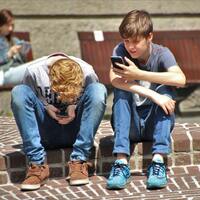
"Infectious diseases do not spread over the internet," the parents wrote in their appellate brief, noting their child is a virtual learner. "For plaintiffs, to vaccinate K.P. would be to force them into participating in an action with illicit connections to the termination of an innocent life, and into activity that condones abortion."
The government defendants argue that although they may attend class online, virtual learners take tests in person, and that legislators aimed the policy at protecting the general public's health.
"Our interest in protecting the health and safety of our children doesn't begin and end at the schoolhouse door," attorney William Lorensen of Bowles Rice, representing the defendants, said. "It's not something that we start caring about when the bell rings in the morning, and we stop caring in the evening."
U.S. Circuit Court Judge Paul Niemeyer, a Ronald Reagan appointee, asked why the state allows homeschooled students to go unvaccinated if its policy is aimed at everyone.
"If you're going to make a large exception, then all of a sudden, you've broken the barrier of the notion that 'we want herd immunity,'" Niemeyer said. "If you want herd immunity and you want to prevent students from exposing other students in the state of West Virginia, then it should be universal."
Lorensen countered that, unlike virtual learners, homeschooled students aren't part of the state school system.
K.P. attended the Upshur County Virtual School before the government defendants, the Upshur County Virtual School's virtual learning coordinator Stacy Marteney, and Upshur County School District Superintendent Christine Miller disenrolled them. U.S. District Judge Thomas Kleeh granted the plaintiffs a preliminary injunction requiring defendants to reenroll the minor plaintiff in the virtual academy.
The Donald Trump appointee ruled that although the government has a compelling state interest in preventing the spread of disease, the statute is not narrowly tailored to that end and thus fails to satisfy constitutional safeguards. Kleeh pointed to 45 other states that offer religious exemptions to their vaccination mandates as proof that the statute is broader than those of different states.
"Plaintiffs face criminal prosecution and sanctions if they fail to educate their daughter," Kleeh wrote. "These hardships are imposed solely because plaintiffs refused to sacrifice their religious beliefs."
Kleeh and the plaintiffs agree the policy is subject to strict scrutiny under the Supreme Court's decision in Fulton v. City of Philadelphia, where the high court ruled that the city violated the First Amendment rights of a Catholic foster care agency when it required it to agree to certify married same-sex couples as foster parents to have its contract renewed. Under Fulton, courts assess whether a policy is neutral and generally applicable.
Marteney and Miller counter that religious and medical exemptions aren't comparable.
"A medical exemption serves the State's interest to maintain childrens' health and well-being in West Virginia in a way that a religious exemption simply does not," the defendants wrote in their brief.
U.S. Circuit Court Judge Harvie Wilkinson asked Marteney and Miller about the 45 other states.
"They're saying, 'hey, folks, why don't you just join the crowd and affiliate yourself with all these other states that are providing religious exemptions from mandatory vaccines here, there and yonder," the Reagan appointee said. "What's the harm?"
Lorensen said that states are free to disagree. Lorensen pointed to a long line of case law that has repeatedly given states the sovereignty to enforce public health measures regardless of religious ramifications.
U.S. Circuit Court Judge Steven Agee, a George W. Bush appointee, asked the plaintiffs' counsel why the Supreme Court's decision in Jacobson v. Massachusetts, a case concerning smallpox vaccinations, where the majority ruled in 1905 that communities have a right to protect against epidemics, doesn't end the inquiry.
Attorney Christopher Wiest, representing the plaintiffs, pointed to Tandon v. Newsom, in which the U.S. Supreme Court found a California law restricting public religious gatherings during the Covid-19 pandemic violated the First Amendment because the state allowed for some secular activity.
"If you're going to start allowing exceptions, then yes, you've got to look at possibly allowing religious exceptions, and the free exercise clause prohibits that sort of discrimination," Wiest said. "I appreciate the fact that we're dealing with a vaccination case, but there's no vaccination exception that I am aware of in the text of the First Amendment."
Wilkinson offered a view different from that of the plaintiffs, who believe the vaccination mandate infringes their rights.
"There are a lot of parents who simply do not want their children exposed to the dangers of contagion," Wilkinsons said. "My friend, this is not just a matter of making someone uncomfortable. You're talking about parents that have children who may be exposed unnecessarily to some very serious illnesses in the absence of a vaccination."
The mandate requires both virtual and in-person students to be vaccinated against chickenpox, hepatitis B, measles, meningitis, mumps, diphtheria, polio, rubella, tetanus and whooping cough. According to the U.S. Centers for Disease Control and Prevention, measles cases spiked cases spiked from 285 nationwide in 2024 to 2,255 in 2025.
The plaintiffs say homeschooling, the only option in West Virginia for children out of compliance with the mandate, isn't possible because the father is disabled and the mother works full-time. Attorneys representing the family and the defendants did not respond to a request for comment.
"The question is whether we want to take a step that is going to unravel mandatory vaccination laws," Wilkinson said.
Source: Courthouse News Service