

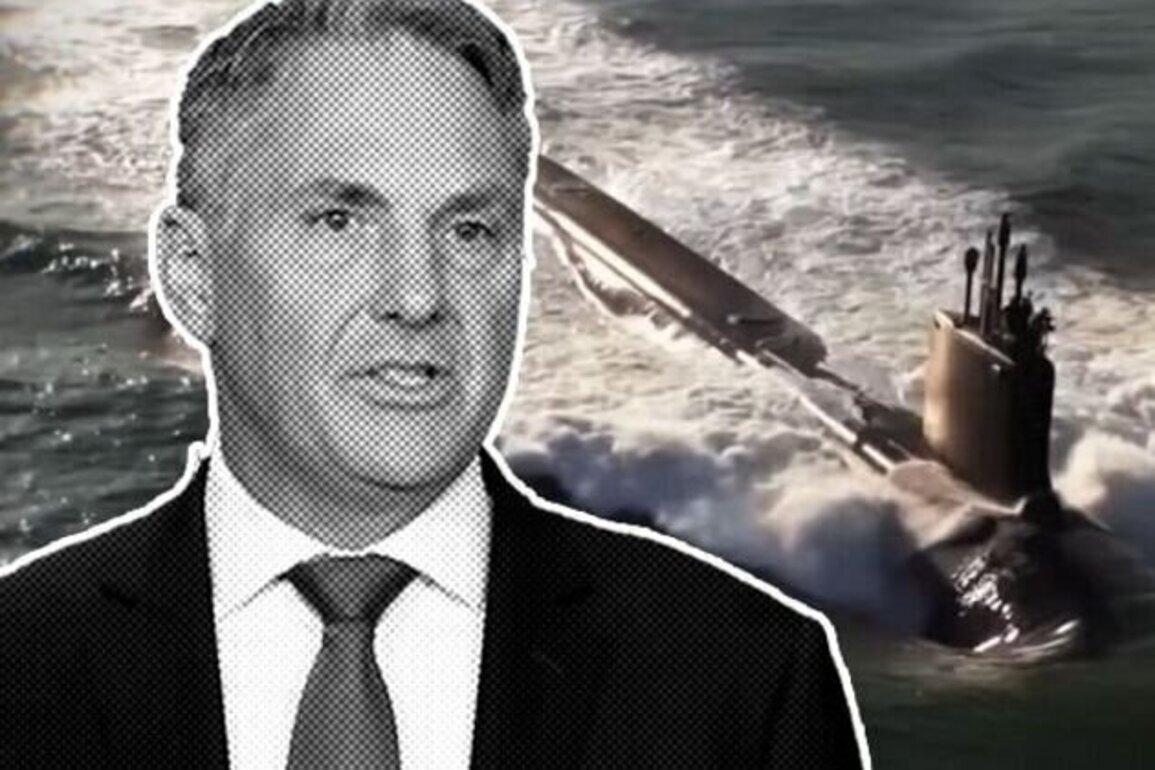
As Washington debates whether it can spare the submarines, Canberra continues to pay for vessels it may never fully control, writes DrBinoy Kampmark.
THERE WERE NEVER the sharpest negotiators in the room, resembling a facsimile ofBertie Woosterin desperate need of the good advice of his manservant, Jeeves. The Australian defence establishment has yet to find a wise head who will finally tell them that the $368 billionAUKUSpact between the three Anglophone powers of Australia, the United Kingdom and the United States has only one oversized beneficiary in mind.
While the Australian Treasury gets drained in throwing cash at U.S. naval yards in acts of stealthy proliferation for Washingtons military industrial complex ($1.6 billion has so far been forked out), it is becoming increasingly clear that a good gaggle of officials and lawmakers have no appetite to either relinquish Virginia-class nuclear-powered submarines (SSN-774) to the Royal Australian Navy or to give its sailors sovereign control of them if that were ever to make the Pacific journey.
The sale of the SSN-774 to Canberra is part of Pillar 1 of the AUKUS enterprise,envisaging, in addition to providing such boats to the Royal Australian Navy (R.A.N.), the rotational deployment of four U.S. SSNs and one UK SSN to Australia out of Western Australia, the subsequent construction of three to five replacement SSNs for the U.S. Navy and aid Australia in the construction of three to five SSNs based on what will be a new UK-Australian design.
Weapons still being funded over survivalHumanity is in a trillion-dollar arms race, struggling to choose survival over self-destruction.
A good temperature reading of reluctance regarding the Virginia-class boats can be gathered from those invaluable reports from the Congressional Research Service, which Australian officials and journalists often ignore and seem reluctant to consult. Given that the U.S. Congress will be the final arbiter on whether a single Virginia SSN is ever transferred to Australian hands under the National Defence Authorisation Act (NDAA), these comprehensive overviews outline the concerns for U.S. lawmakers and the likely directionregarding the expectations of AUKUS. Australias doddery and woolly-minded political class ignore them at their peril.
The latest report, authored by Naval Affairs AnalystRonald ORourkeand published on 26 January 2026, lacks a glamorous title. But there is enough punch inNavy Virginia-Class Submarine Program and AUKUS Submarine (Pillar 1) Project: Background and Issues for Congressto sting officials in Canberra into a state of nightmare-inducing worry.
The issues for Congress identified in the report are not new. These include whether the procurement rate for the financial year (FY2026) of the SSN-774 and subsequent years should remain at two boats per year, or be adjusted; how the Navy and Department of Defence are using funds from the submarine industrial base (SIB) since FY2018 and how this has affected the production of Virginia-class boats; the maintenance backlog of SSNs in service and its impacts on SSN and overall Navy capabilities, and steps the Navy plans to take to reduce the backlog; and potential benefits, costs and risks arising from the procurement rate and the way SIB funds are used.
The crucial test here, and one that would do away with any suggestions of Australian sovereignty on the matter, is how such benefits, costs and risks compare with those of an alternative of procuring up to eight additional Virginia-class SSNs that would be retained in U.S. Navy service and operated out of Australia along with the U.S. and UK SSNs that are already planned to be operated under Pillar 1.
Concern is expressed, as with previous reports, about the lack of clarity as to whether Canberra would support the U.S. in a future conflict with China:
When America raises the bill, Australia pays the priceAs Washington demands unprecedented military spending from its allies, Australia faces a stark choice between strategic loyalty and the preservation of its social and economic foundations.
Australias role as an annexure of U.S. strategic deterrence against China in the Pacific is crudely confirmed, its bases mere platforms for Washingtons warmaking plans, with the R.A.N. left undistinguished and diminished. This applies both to the naval component andRAAF Base Tindalin the Katherine region, which will host six nuclear-capable B-52 bombers. Australias signatory status as a member of theTreaty of Rarotonga, also known as the South Pacific Nuclear Free Zone Treaty, would, if it has not already, cease to be relevant.
The review of AUKUS conducted by U.S. PresidentTrumps Undersecretary of Defence Policy,Elbridge Colby, while not available for public eyes, can hardly have deviated from the central premise that parting with the Virginia boats will be only possible if the production rate of submarines rises to two a year and given that, what strategic implications would arise regarding U.S. control over them.
Colby hadpreviously warnedthat the AUKUS pact would only lead to more submarines collectively in ten, 15, 20 years, which is way beyond the window of maximum danger, which is really this decade.
When Colbys completed review was sent to the Australians last December, Pentagon spokesmanSean Parnellreleased astatementinsisting that the recommendations for the review were for the benefit of improving the security pact:
It is hard to see how Australia ends up well here.
We should never have agreed to AUKUSAustralia is paying for America's submarines, striking a deal with a President we still have to fact-check.
Australian pundits on the strategic cocktail circuit have suggestions as to how to sell Canberras broader capitulation to the U.S. imperium and its military. These are drearily unoriginal.
On the stationing of B-52s in the Northern Territory, for instance, defence expertMiranda Booth, writing for theLowy Institute Interpreter, suggests the rather crusty propaganda line of collaboration:
Such duplicity would magically dispel the appearance that Australia was merely a servile and willing client to U.S. power.
Australian Defence MinisterRichard Marles, a fool of Chaucerian proportions, deserves a star of commendation in his denials of what AUKUS really entails. On his regular sojourns to Washington, he always comes back with the same glassy ignorance, failing to digest any contradicting briefings or literature that might have appeared. He has a story to tell a public he wishes to gull and he always insists on sticking to it.
Pity for Australian electors that its never the right one, let alone accurate.
DrBinoy Kampmarkwas a Cambridge Scholar and is a lecturer atRMIT University. You can follow Dr Kampmark@BKampmark.
Related Articles
- When America raises the bill, Australia pays the price
- Invisible no more: How drone warfare exposes AUKUS strategic blind spot
- We should never have agreed to AUKUS
- Australias top-secret AUKUS cloud may hand our data over to the U.S.
- Chinese investor buys land near AUKUS ports, sparking security fears