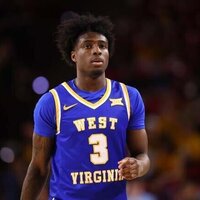



(CN) - Four players on the West Virginia University football team challenged the NCAA's eligibility criteria in the Fourth Circuit on Tuesday, arguing a rule that limits students to five years of competition was being misapplied to former community college athletes.
The athletes - Jimmori Robinson, Jeffrey Weimer, Tye Edwards and Justin Harrington - matriculated to West Virginia University after attending community college, also known as junior college.
Under the NCAA's "Five-Year Rule," student-athletes are eligible to play sports for up to four seasons within a five-year period. The window to play begins when a student first enrolls in an institution of higher learning, which includes community colleges, even though those schools are not sanctioned by the NCAA.
The four Mountaineers contend the junior college, or JUCO, rule is anticompetitive and arbitrary, limiting the participation of players in the college sports market simply for attending preparatory schooling.
U.S. District Judge John Preston Bailey issued a preliminary injunction in August enjoining the NCAA from enforcing its eligibility rules against the players. Bailey, a George W. Bush appointee, determined the student-athletes were likely to succeed on the merits of their claims in light of the U.S. Supreme Court's 2021 ruling in NCAA v. Alston, which determined the governing body could not bar colleges from offering education-related payments to student-athletes.
NCAA attorney Rakesh Kilaru of the D.C.-based firm Wilkinson Stekloff argued Tuesday that the federal judge issued the injunction without conducting a fact-specific inquiry of the college football market. The industry has undergone seismic changes since the Alston ruling, Kilaru argued, including a multi-billion dollar legal settlement last year that paved the way for colleges to directly pay student-athletes.
"There is no evidence on how compensation is playing out in college sports today," Kilaru said.
U.S. Senior Circuit Judge Henry F. Floyd, a George W. Bush appointee, agreed there was "big money" at stake today.
"I mean, just in Division I, it seems to me they require more than a quick look," Floyd said, referring to the highest level of college football. "The rule of reason should be applied in these cases."
Attorney John Gianola of the Lewis Gianola law firm in West Virginia represented the players at the hearing. He acknowledged it was not "the most robust evidentiary case," but the federal judge issued a preliminary injunction, not a final ruling on the case's merits.
He pointed out the House case referred to by Kilaru was litigated for eight years before it reached settlement.
"It's not possible or practical to require that on the front end for a preliminary injunction," Gianola said.
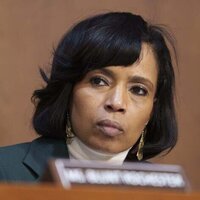
U.S. Circuit Judge Pamela A. Harris, a Barack Obama appointee, questioned whether a controversy still existed in the case - the preliminary injunction allowed the players to compete in the 2025-26 football season.
Kilaru said the players filed their suit only a month before the start of the season. Doing so provided the players a strategic advantage since it would take several months for the controversy to wend its way to the appellate court. Anecdotally, Kilaru said he has seen a similar strategy employed in other athlete's cases, too.
"I think the facts of this case show how it can be very easy to evade review, and how we might just find ourselves in the very same position at the start of the next season, in the same court, if more players are seeking eligibility," Kilaru said.
Gianola said the case was filed late because the players were waiting for the NCAA to decide if it would grant them eligibility waivers for the season. The players missed several weeks of practice as a result.
While the Fourth Circuit has not addressed antitrust challenges to the JUCO Rule, other appellate courts have wrestled with the issue.
The Third Circuit vacated a lower court's ruling in November that permitted Rutgers' quarterback Jett Elad to play in the 2025-26 football season despite a year of junior college play. The appellate court did not reject the merits of Elad's arguments but argued the lower court failed to properly analyze the case.
In October, the Sixth Circuit dismissed as moot a similar case filed by Diego Pavia after the NCAA granted the Vanderbilt quarterback a waiver for the season.
In July, the Seventh Circuit overturned a preliminary injunction that granted University of Wisconsin cornerback Nyzier Fourqurean a fifth year of eligibility. It found the lower court judge erred by relying on the Alston case to define the college sports market rather than conducting an independent analysis, among other issues.
U.S. Circuit Judge DeAndrea Gist Benjamin, a Joe Biden appointee, also served on Tuesday's panel.
Source: Courthouse News Service